14 November 2026 · Twitter Ban Service · 18 min read
How to remove public records: sealed files, broker copies and Google results
Most government files cannot be deleted, so to remove public records you work on three layers: ask a court to seal or expunge eligible cases, shield your address through a state confidentiality program, then strip the copies. People-search sites delete listings on opt-out, California's free DROP sends one request to over 600 registered brokers, and Google drops results once the source changes.
Can you delete public records, or only limit who sees them?
You can rarely delete public records at the source; the law usually lets you seal, restrict or shield them instead.
A public record is a document a government body creates or keeps while doing its job: a court docket, a deed, a tax assessment, a voter roll entry, a business filing. State open-records laws and the federal Freedom of Information Act make those files available on request, which is how data brokers copy them in bulk. So a question about how to remove information from public records is really two questions. Whether you search how to remove your info from public records, how to remove your information from public records, how do i remove my information from public records or simply how to get rid of public records, the split is the same. One concerns the official file at the courthouse or county office. The other concerns every copy that now sits on people-search sites, news archives, social posts and search results.
Twitter Ban Service covers one narrow slice of this picture: posts on X that publish someone's private details or use a record to harass them. Everything else on this page is a route you file yourself, and most of it costs nothing.
| Layer | Who controls it | What you can ask for | What stays |
|---|---|---|---|
| Court case files | The clerk and the judge | Sealing or expungement, if state law makes the case eligible | Limited access for courts and police |
| Deeds, assessor and recorder files | County recorder or assessor | Address shielding where your state allows it | The deed and parcel record |
| Voter registration | State or county election office | A substitute address through a confidentiality program | Your registration itself |
| People-search listings | Each broker | Opt-out or deletion; DROP for California residents | Brokers you never contacted |
| Google results | Personal-info removal or Refresh Outdated Content | The source page until its owner edits it |
Read the table as a ladder; it is the short answer to how to remove yourself from public records. Anyone who promises to delete public records across all five rows is selling something no court, county or search engine offers.
How do I remove my name from public records held by a court?
Petition the court that handled the case to seal or expunge it, which works only when your state's statute makes that case eligible.
Sealing and expungement produce different results. The legal-aid guide How To Justice explains the sealed versus expunged distinction this way: a sealed record is hidden from the public and needs a court order to reopen, but it is not cleared, while an expunged record leaves the official court record, though courts and agencies keep limited access for later charges or sentencing. The same guide warns that states define the two words differently, so the statute matters more than the label.
For anyone asking how to remove your name from public records at the courthouse, the sequence rarely changes:
- Get your full criminal history from the state repository or the clerk, so the petition lists every case number.
- Read the eligibility rules in your state's sealing or expungement law: offense type, waiting period and later convictions usually decide it.
- File the petition on the court's self-help form, serve the prosecutor when the rules require it, and attend any hearing.
- Send certified copies of the order to agencies and to every broker still showing the case.
That last step is where most people stall. A sealing order binds the court system; a website that copied the docket two years earlier is not a party to it, so the copy stays until someone asks the site to update it. So how can i remove my name from public records that a site copied years ago? Send it the order and ask for an update. Petitions sit outside what Twitter Ban Service does; a clerk's self-help desk or a legal aid office is the right first call for how to remove my name from public records in a criminal matter.
The same steps cover how to remove name from public records when a case was filed under a former or misspelled name: list every variant in the petition.
Civil judgments, divorces and evictions run on separate rules, and many are never sealable, which is the usual dead end for anyone asking how do i remove myself from public records after a lawsuit. Learning how to remove myself from public records in those cases means working on the copies instead.
How do I remove my address from public records like deeds and voter rolls?
Enroll in your state's address confidentiality program if you qualify; without it, the address on a deed or voter file usually stays public.
An address confidentiality program, often branded Safe at Home, replaces your real address on government records with a substitute one and forwards your mail. The Minnesota Secretary of State's list of programs in other states defines it as a service providing "a substitute address and mail forwarding services to victims of crime and protected persons", and that list marks six states, among them Alabama and Wyoming, as having no program. Eligibility is set per state, usually around domestic violence, stalking or similar threats, and enrollment goes through a state-approved advocate or office.
Voter files are the clearest win. The National Association of Secretaries of State's January 2026 update on voting and address confidentiality programs says participants register under the substitute address, so the actual address does not appear on public voting records. That is the strongest answer to how do i remove my address from public records when safety is the reason.
Property files are harder. Deeds and assessor rolls exist so anyone can check title, and California's privacy law treats public real estate and property records as outside the CCPA's personal information. Ask the county recorder whether your state lets any group, such as program participants, shield an owner's address; the answer differs by state and sometimes by county. Enrollment is also outside Twitter Ban Service's reach; only the state program office and its approved advocates can sign someone up. For anyone working out how to remove my address from public records, or how do you remove your address from public records without qualifying for either route, the copies are what is left to work on.
Is there a way to opt out of public records at the agency?
No general opt-out exists at the source, but agencies must withhold certain personal details when someone requests a file.
People type opt out public records expecting a form like the ones brokers run. Government offices do not work that way, and how can i remove public records at a county office has a blunt answer: you restrict them, you do not erase them. Under federal law, FOIA Exemption 6 in the Justice Department's guide lets an agency withhold personnel, medical and similar files when release would be a "clearly unwarranted invasion of personal privacy", weighing your privacy against the public interest each time a request arrives. State open-records statutes carry their own exemption lists, and those differ widely, so the statute for your state is the place to look.
Two practical points follow. You cannot opt out of public records that were released before an exemption applied; withholding only affects future requests. And a request to an agency to correct an error, such as a wrong address on a filing, is a different thing from asking it to hide accurate data. A correction request is often the only public records removal request an agency will act on without a court order or a protective program. So if your question is how to remove my information from public records at the agency, the realistic request is a correction or a redaction, the closest thing to how to remove public record entries at the source. Accurate data an agency must disclose is not something you can remove from public records by asking.
Records offices give Twitter Ban Service no standing, and nobody else can file there on your behalf without being your lawyer or authorized agent.
How to remove public records from the internet: people-search sites and DROP
Opt out of each people-search site that republishes the record, or, as a California resident, send one DROP request to every registered broker.
People-search sites are data brokers: they buy court, property and voter files in bulk, merge them with phone and email data, and sell the profile. Their copy is not a public record, which is why it is the layer you can usually remove. Search phrasing varies (how to delete public records on internet, how to delete public records from internet, how do i delete public records from the internet), yet every version lands here, because this is the only part of the record a private company controls. If you want to know how to remove public records online, this order wastes the least time:
- Search your name with each past city and note every listing URL on the large people-search sites.
- Use each site's own opt-out page. Spokeo, for one, runs its own form, and an opt-out at one broker never reaches the others.
- If you live in California, open the state's Delete Request and Opt-out Platform, verify residency through the California Identity Gateway and submit one request.
- Recheck after 45 to 90 days, because a broker that loads a fresh records feed can list you again.
The California Privacy Protection Agency says DROP is free, opened to residents on 1 January 2026 and reaches over 600 registered brokers, which must process requests at least once every 45 days from 1 August 2026; status updates can take up to 90 days. Where a profile came straight from a courthouse file, the CCPA's exclusion for government records means a broker may keep those parts.
That is also how to remove information from public records free outside California: every broker opt-out costs nothing, and sites selling a "remove my public records" plan file the same forms for you. This site sells no such plan. Anyone asking how to remove public records from internet listings should start with the largest sites and work down the list. It is how to get public records off the internet in practice, and how to remove your public records from the internet without a lawyer: the file stays, the copies go.
Removing public records from the internet this way clears the copies, not the courthouse file. For how do i remove public records from the internet after a sealing order, or how to get public records removed from the internet once a case is dismissed, attach the order to each opt-out. For how to remove my public records from the internet in general, the four steps above are the whole job, repeated twice a year.
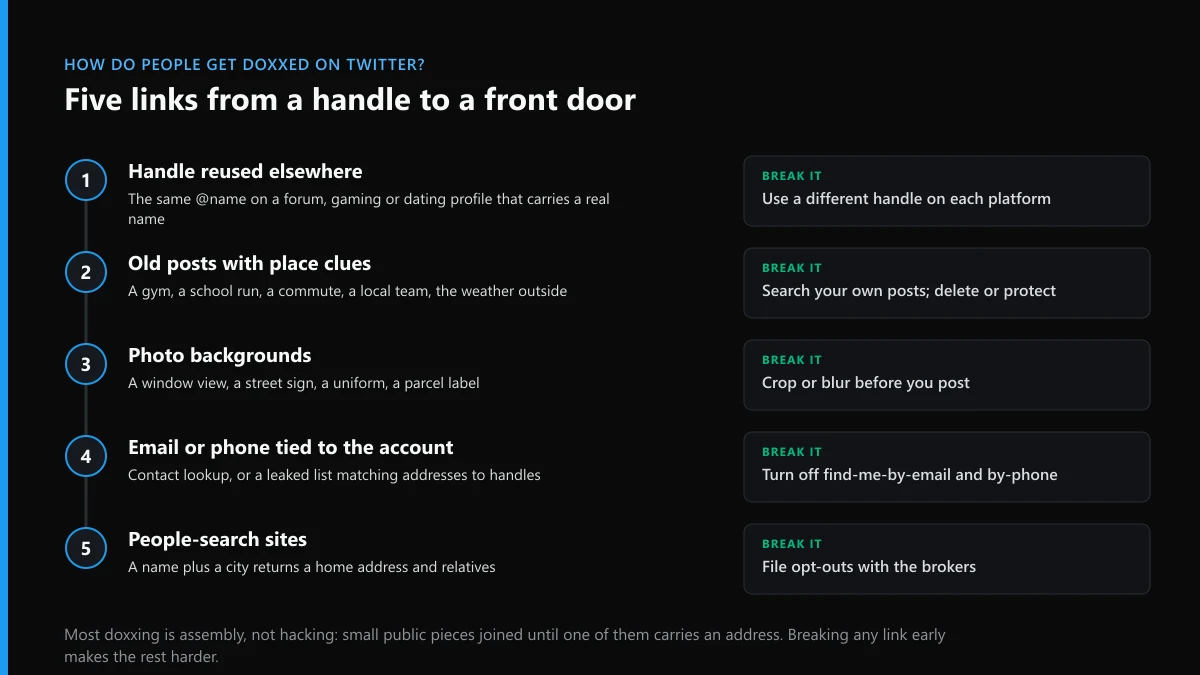
How to remove public records from Google after the page changes
Ask Google to drop results that show your contact details, then request a refresh for pages the source has already changed.
Google is an index, so it can only hide its link to a page. Its help page on removing personal info from Google Search lists your address, phone number and email among the details you can ask it to remove, and it says Google might not take something down if it is important or newsworthy. The same page notes the removed content might still be on the internet, so the site owner remains the person who can delete it.
That is why the order matters when you remove public records from google, and why how to remove public records from google is really a sequencing question. First get the broker listing deleted or the court order served, then submit the dead or edited page to Google's Refresh Outdated Content tool so the stale snippet drops without waiting for a recrawl. For address results specifically, the separate walkthrough on clearing an address from Google Search and Maps covers Results about you screen by screen.
Twitter Ban Service files nothing with Google, since Results about you is tied to your own Google account. A court docket hosted on a government site is the case Google is least likely to remove. A sealing order sent to the court, which then takes the page down, solves both layers at once. For a single broker listing, how to remove public record from google is the same two-step job: delete at the source, then refresh.
What if someone posts your record on X or another platform?
Report the post under the platform's privacy or harassment policy; a public record does not give anyone the right to use it to target you.
Old mugshots, eviction filings and home addresses turn up in posts written to shame or threaten someone. Twitter Ban Service works only on X, where the X private information and media policy bans sharing a home address or other private details without permission. It reads the post, checks it against that policy, and files genuine violations through X's own report forms, with the outcome left to X.
Posts on X
False claims built around a real record fall under defamation on X and the routes that apply, while scanned documents or photos posted without consent may fit a DMCA notice for leaked content on X. A burner profile set up to repost your file is worth checking against the signs of a fake Twitter account, and the background on how X decides to suspend accounts and what an X ban actually covers sets realistic expectations.
Facebook and Instagram
A mugshot post with false captions may be libel on Facebook, and Facebook post removal routes sorted by case show which form fits. A profile impersonating you with your record attached is covered in the impersonation route for a Facebook account. Someone threatening to publish your file unless you pay is a pattern described under Facebook blackmail scams, and photos you took yourself can go through a copyright claim on Facebook or X.
YouTube, Snapchat, TikTok and WhatsApp
Videos that read out your address go through a YouTube privacy complaint; for other violations, see how to get a YouTube video taken down, when a channel rather than a video is the target and, for footage you own, how a copyright strike on YouTube works. On Snapchat, compare taking down a Snapchat account for a real violation with what deleting someone's Snapchat really involves. On TikTok, read the limits on deleting another person's TikTok, and on WhatsApp, what a WhatsApp takedown means in practice.
Record-removal scams
Ads that promise to wipe a criminal record overnight are a known bait. Use the report routes for a Facebook ad scam, reporting a scammer on TikTok or reporting a Facebook Marketplace seller when the offer arrives that way.
What does Twitter Ban Service decline when a record is involved?
It declines cases about the record itself and any request to silence someone within the rules.
Reporting a journalist, a court reporter or a critic who accurately cites a public case is not something Twitter Ban Service takes on, because accurate reporting on public records is usually allowed. It also declines volume tactics. Mass reports do not decide outcomes, as the pages on what a WhatsApp mass report bot actually sends, how YouTube reviews flags from report bots and what Snapchat's review counts explain, and false reports can backfire on the reporter. The same applies to requests framed as a TikTok account ban service.
When a case does fit, the process is plain. You send the post link and a short note on what it exposes. The team checks the post against X's private information rules, says whether it qualifies, and files the report through X's forms if it does. Nobody asks for a password or a login code, and nobody promises a removal: X makes that decision.
FAQ
How do I remove my name from public records for free?
In most cases you cannot take your name off the government file itself, but every route that limits it is free or low cost. For a criminal case, ask the court clerk whether it qualifies for sealing or expungement under your state's law; many courts post petition forms online, and legal aid offices help with them. For the copies, use each people-search site's opt-out form, and California residents can use DROP, which sends one request to over 600 registered brokers. That is how to remove information from public records free: sealing for the file, opt-outs for the copies. The same order answers how to remove your name from public records, how to remove my name from public records after a dismissed case, and how to remove name from public records that brokers list under a variant spelling. If you are asking how can i remove my name from public records completely, courts and police keep some access even after expungement. No legitimate route asks for your passwords.
How do I remove myself from public records completely?
You can't remove yourself from public records completely, because agencies must keep files such as deeds, court dockets and voter rolls. What you can change is who sees them. Sealing hides an eligible case from the public, expungement removes it from the official court record with limited access kept for courts and agencies, and an address confidentiality program swaps your home address for a substitute on government files. So the realistic answer to how to remove yourself from public records is a sequence, not one form. Start with the record that does the most harm: an arrest, an address or an old judgment. Work out which office holds it, ask what your state's law allows, and keep a copy of every order. Then turn to the brokers and search results that copied it. People asking how to remove myself from public records, or how do i remove my information from public records after moving, usually get the most relief from that copy layer.
Can I opt out of public records the way I opt out of people-search sites?
No. There is no single opt out of public records at government offices. Agencies release files under open-records laws, and the only brakes are exemptions written into those laws, such as the federal FOIA exemption for personal privacy, which an agency applies request by request. The forms people find when they search opt out public records are almost always broker opt-outs: Spokeo, Whitepages and similar sites, each with its own page. Those work because the broker's profile is a commercial product, not a government file. California residents can reach more than 600 registered brokers at once through DROP, which the state says is free and which brokers must process at least every 45 days from 1 August 2026. Expect partial results, since California's privacy law excludes data taken from government records. So anyone asking how can i remove public records at the agency gets a narrower answer: exemptions, sealing and confidentiality programs only.
How do I delete public records from the internet?
Work from the copies inward. First list every page that shows the record: people-search listings, news articles, court-data sites and social posts. Then use the matching route for each. Brokers take opt-out requests. News sites take correction or update requests, which work best with a sealing or expungement order attached. Social platforms take privacy or harassment reports when a post uses your details to target you. This is how to remove public records from the internet without touching the government file, and it is also how to get public records removed from the internet after a court seals the case. For anyone asking how do i remove public records from the internet, or how to remove my public records from the internet in one go, there is no single switch outside California's DROP for brokers. Learning how to remove your public records from the internet is mostly record keeping: a list of URLs, dates and replies.
How do I remove public records from Google search results?
Google can remove a result, not the record. Its personal-info policy lets you ask it to remove results that show your address, phone number or email, and its help page says it might not remove something that is important or newsworthy. So to remove public records from google, start at the source. Get the broker listing deleted or the court order served, then submit the changed page to Google's Refresh Outdated Content tool so the old snippet clears. If the result still shows contact details from a third-party site, file a removal request from Results about you or the personal-info form. How to remove public records from google when the page is a government court portal is the hardest version: Google rarely acts on it, and the court's own sealing process is the route that works. The same steps answer how to remove public record from google for a single listing.
How do you remove your address from public records if you are being stalked?
Apply to your state's address confidentiality program, often called Safe at Home. These programs give enrolled people a substitute address for government records and forward their mail, and the NASS January 2026 update says participants register to vote under that substitute address, so their real one does not appear on public voting records. Most states run one; Minnesota's comparison list marks six without a program. Enrollment usually goes through an advocate at a victim services office, and each state sets its own eligibility. That is how do i remove my address from public records in the safety case. For how to remove my address from public records already copied by brokers, pair enrollment with opt-outs and Google removal requests. If the address is being posted on X to threaten you, report it under X's private information policy and keep screenshots for the police. Any service helping with that report should never ask for your password.
Can I remove public records online without paying a removal company?
Yes, for the copies. Every major people-search site runs a free opt-out page, Google's removal tools are free, and California's DROP is free by law. Paid removal companies file those same forms on a schedule and recheck for relisting, which saves time but buys no extra legal power. So how to remove public records online on your own is a checklist: find each listing, file its opt-out, confirm the email, then ask Google to refresh the dead page. Questions like how to delete public records on internet sites, how to delete public records from internet archives or how to remove public records from internet search all end in that checklist. What no company can do is touch the government file; how to get public records off the internet stops at the copies unless a court seals the case. Removing public records from the internet is ongoing work, and how to get rid of public records for good, or how to remove public record entries permanently, has no one-time answer.
What is a public records removal request, and who handles it?
It is any formal request to restrict, correct or delete a record, and who handles it depends on where the record lives. A court handles sealing and expungement petitions under state law. A county recorder or election office handles address shielding for people enrolled in a confidentiality program. An agency's records officer handles corrections and decides exemptions when someone asks for a file. A broker handles its own opt-outs, and Google handles removal of its results. When people ask how to remove your info from public records, how to remove your information from public records or how to remove my information from public records, they usually need two or three of these requests at once, because no single office can remove from public records everything a search turns up. Twitter Ban Service handles a narrower thing: X posts that expose private information or use a record to harass someone, reported through X's own forms, with X deciding the outcome. It does not file court petitions or agency requests for anyone.